需求分解樹
每個需求都可透過 derivedFrom 關係建立上下游分解鏈。系統級需求自動向下分解到元件級,形成完整的需求層級結構。
視覺化的流程圖讓需求的父子關係一目了然,點擊任一節點即可展開完整的追溯路徑。
- derivedFrom 需求分解鏈
- 視覺化需求流程圖
- 點擊展開完整追溯路徑
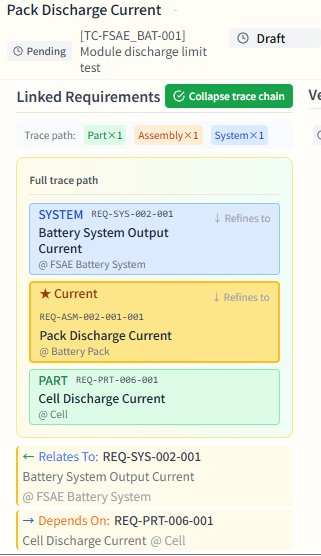
derivedFrom 分解樹 + 5 種 Link 關係,自動生成需求追溯矩陣 (RTM)。需求變更即時通知下游 — DFMEA、測試、參數全部連動。
每個需求都可透過 derivedFrom 關係建立上下游分解鏈。系統級需求自動向下分解到元件級,形成完整的需求層級結構。
視覺化的流程圖讓需求的父子關係一目了然,點擊任一節點即可展開完整的追溯路徑。
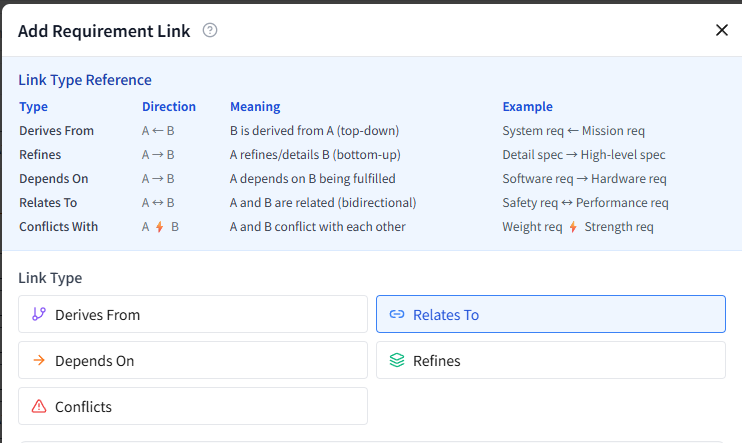
支援 derives_from、relates_to、depends_on、refines、conflicts_with 五種標準需求關係類型。
每種關係在追溯矩陣中以不同顏色標示,讓團隊快速識別需求間的相依性與衝突。
系統自動彙整所有需求的上下游關係,產出標準 RTM 矩陣。無需手動維護 — 新增或修改需求時,矩陣即時更新。
搭配 Matrix View 可以交叉比對需求與組件的對應關係,確保每個需求都有對應的驗證項目。
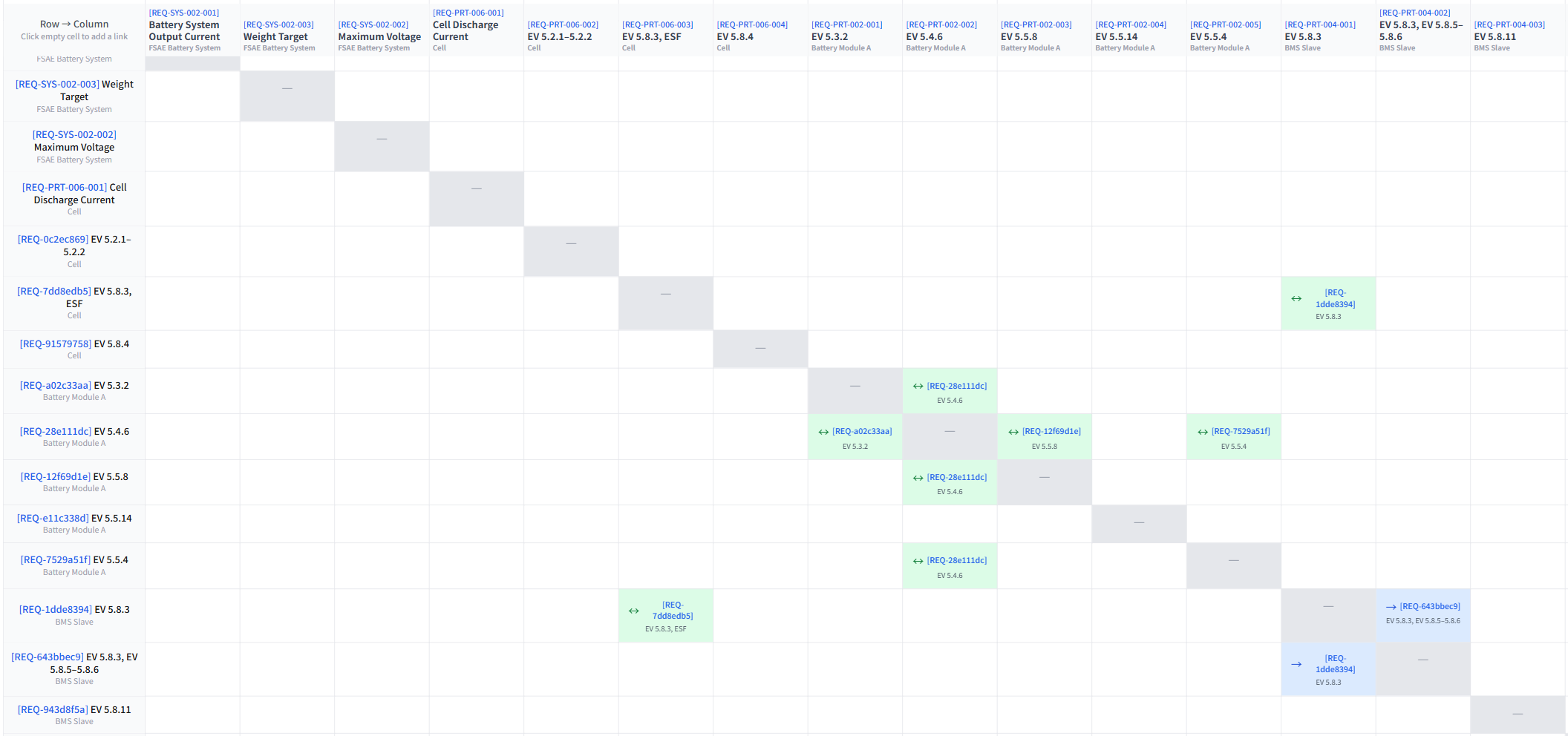
開啟 Demo 專案,檢視完整的需求分解樹與追溯矩陣。
An RTM maps requirements to their source, design elements, test cases, and verification results. NIL-MISS auto-generates RTM from the derivedFrom decomposition tree — covering all V-Model phases from stakeholder needs to unit tests with zero manual maintenance.
Yes. NIL-MISS offers full RTM functionality completely free. Unlike IBM DOORS ($10,000+/seat), NIL-MISS has no per-seat cost and adds native BOM hierarchy and DFMEA that DOORS lacks. No credit card required.
Yes. NIL-MISS covers all 9 V-Model phases from stakeholder requirements to unit tests. Requirements are traced through system design, subsystem, and component levels down to verification test cases, with automatic coverage reporting.
Every requirement links to a parent requirement via derivedFrom. System-level requirements auto-decompose to subsystem and component levels. The platform auto-generates an RTM showing every requirement-to-component and requirement-to-test linkage.