7 步法結構化工作表
完整遵循 AIAG-VDA 2019 標準的 DFMEA 格式。從結構分析、功能分析、失效分析到風險評估,每一步都有清晰的欄位引導。
自動計算 AP (Action Priority) 等級,紅/黃/綠三色視覺化標示風險優先順序。
- AIAG-VDA 2019 完整格式
- AP 等級自動計算
- S/O/D 評分引導
- 風險等級視覺化標示
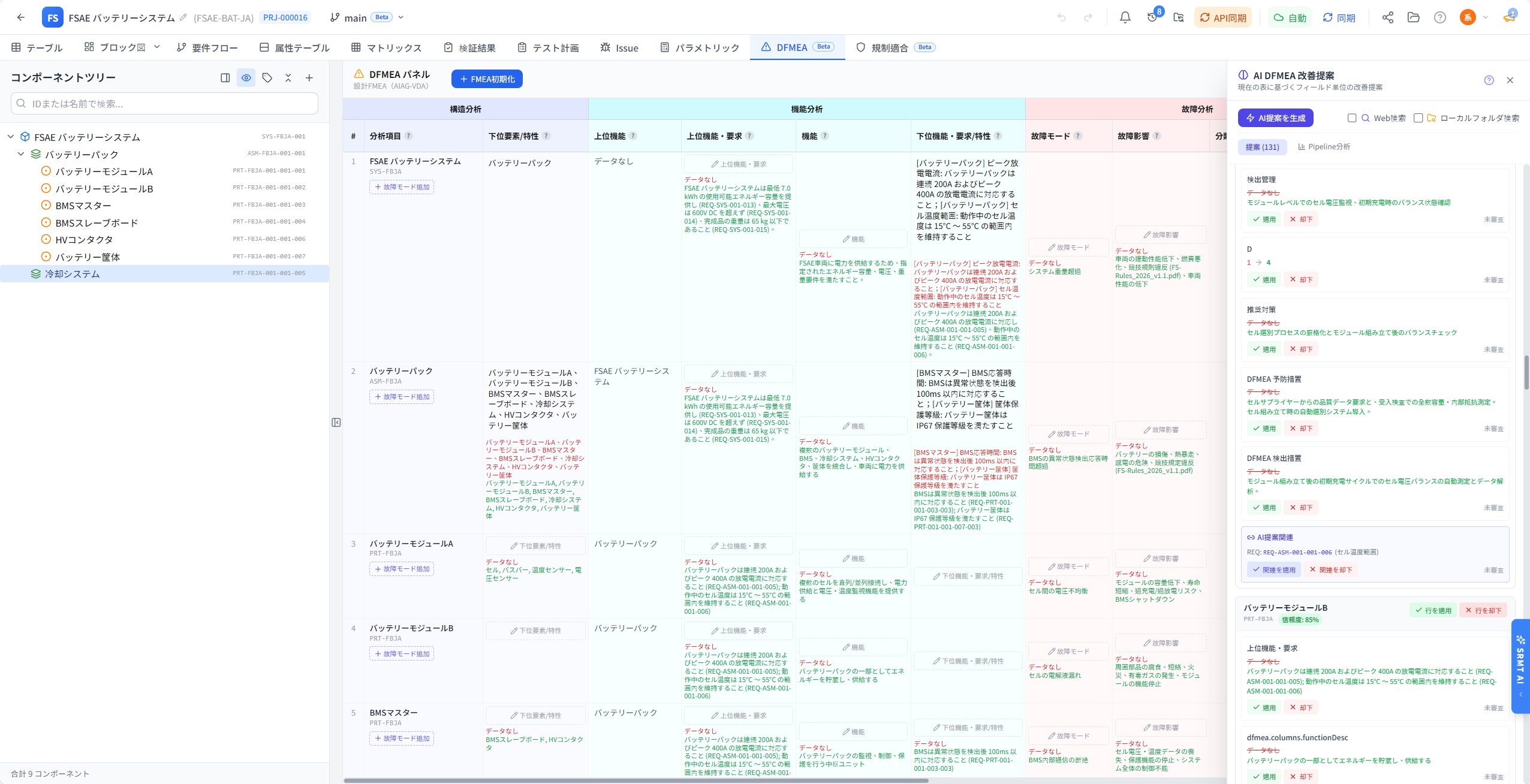
結構化 7 步法工作表,AI 自動辨識潛在失效模式並提供改善建議。與 BOM 結構和測試計劃完整連動,確保每個潛在風險都有對應的管控措施。
完整遵循 AIAG-VDA 2019 標準的 DFMEA 格式。從結構分析、功能分析、失效分析到風險評估,每一步都有清晰的欄位引導。
自動計算 AP (Action Priority) 等級,紅/黃/綠三色視覺化標示風險優先順序。
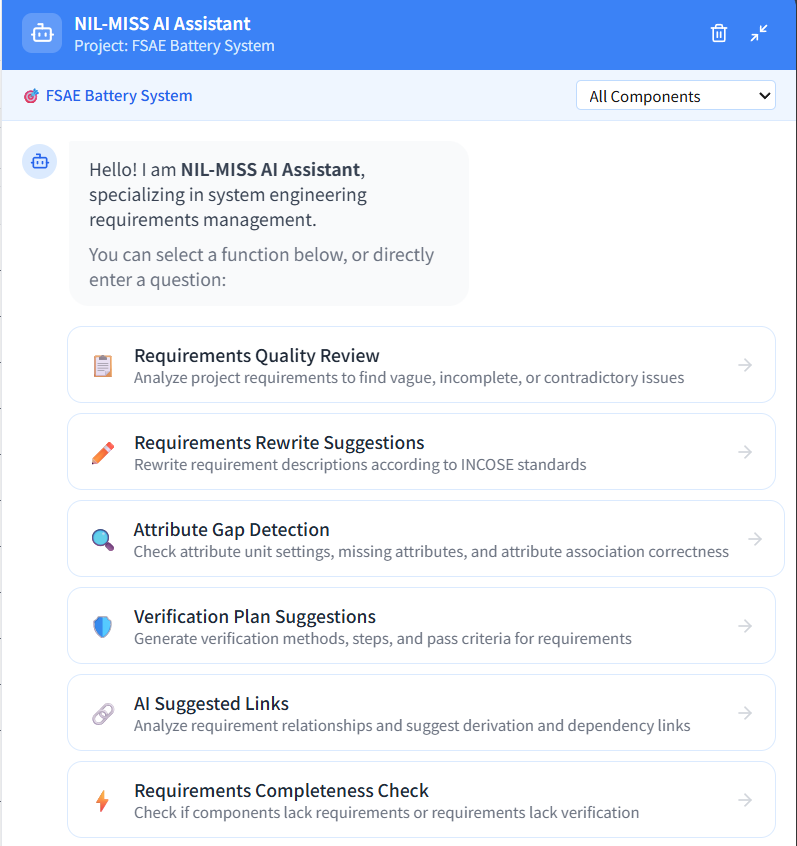
AI 根據 BOM 結構和組件屬性,自動辨識潛在失效模式、失效原因和失效影響。
AI 同時產出建議的預防措施與偵測措施,大幅減少 DFMEA 編寫時間。
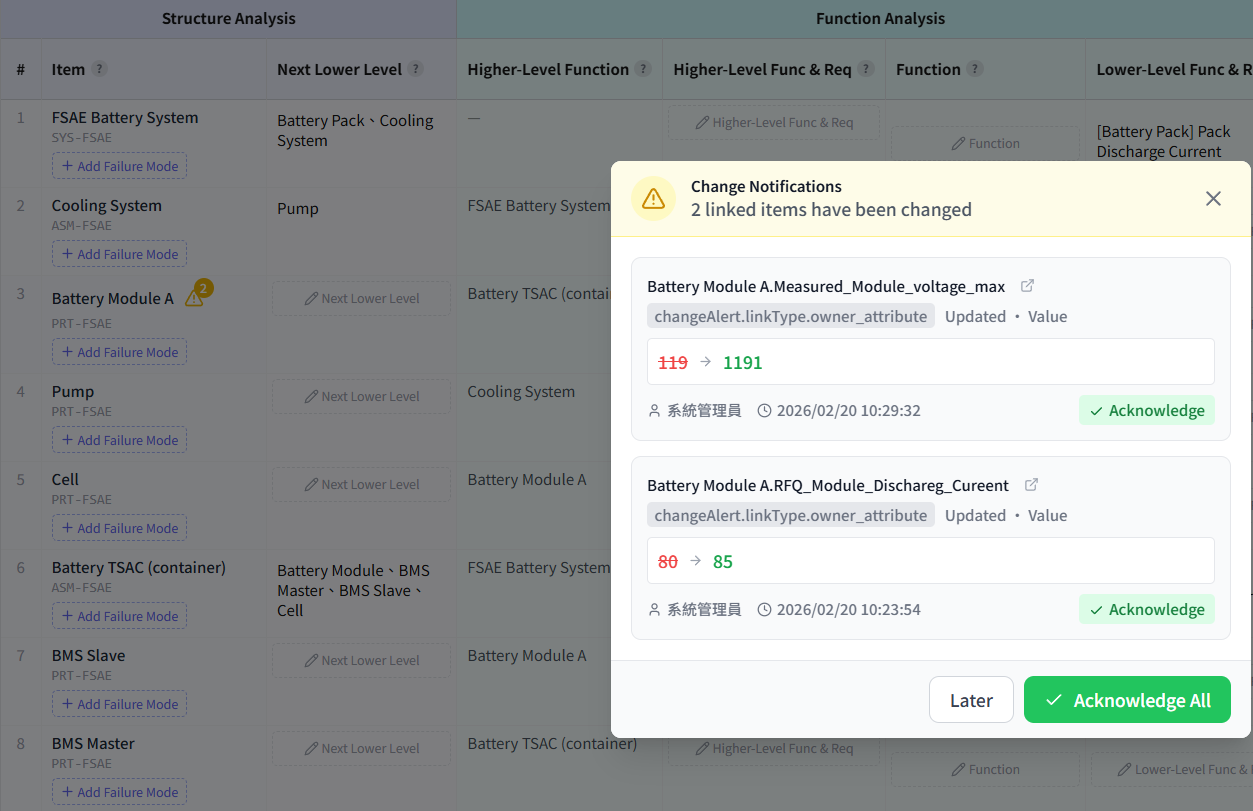
DFMEA 項目自動關聯對應的 BOM 組件與需求。當組件設計變更時,相關的 DFMEA 項目自動標記需重新審查。
測試計劃與 DFMEA 偵測措施對應,確保每個風險都有驗證覆蓋。
開啟 Demo 專案,讓 AI 幫你分析潛在失效模式。
DFMEA (Design Failure Mode and Effects Analysis) systematically identifies potential failure modes in product design. AIAG-VDA 2019 is the latest automotive joint standard using a 7-step process: Planning, Structure Analysis, Function Analysis, Failure Analysis, Risk Analysis, Optimization, and Results Documentation.
NIL-MISS DFMEA links directly to your BOM and requirements. When a component changes, related DFMEA items are automatically flagged for re-review. AI suggests failure modes based on BOM structure. AP (Action Priority) is auto-calculated. Excel is disconnected and requires manual cross-referencing.
Yes. NIL-MISS uses Google Gemini multi-agent AI to analyze BOM structure and component attributes, automatically suggesting failure modes, causes, effects, prevention and detection measures — reducing DFMEA authoring time by up to 80%.
Yes on both. NIL-MISS DFMEA is completely free. The AIAG-VDA 2019 format aligns with ISO 26262 functional safety traceability requirements. Start free at nilmiss.com.